The post office run was the warm-up. Picked up the package, talked shop with a timid postman and a genuinely curious post woman who wanted to know what was buzzing in the box. Drove home with thousands of new friends in the back.
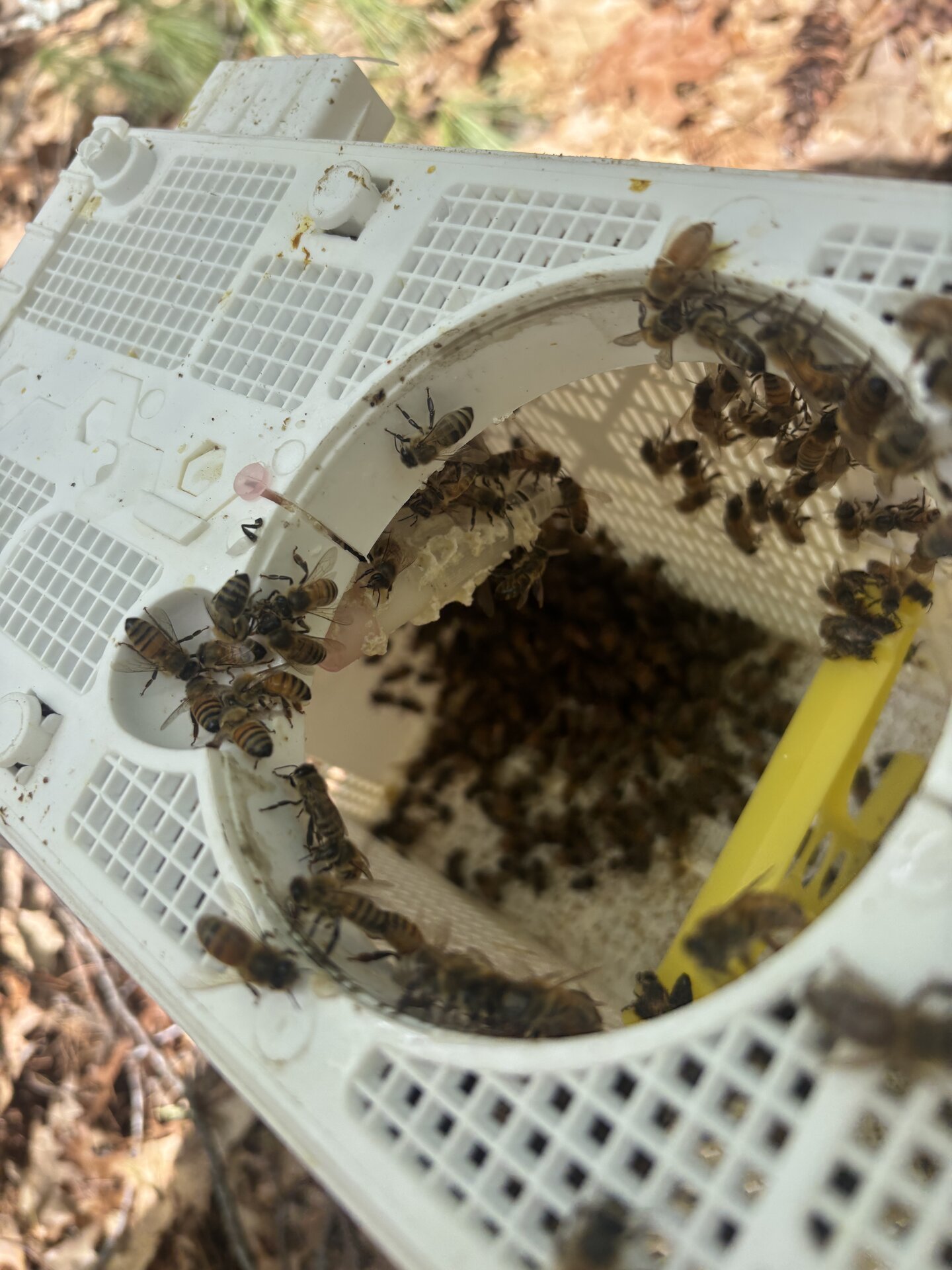 The package, stragglers will make their way to new box soon.
Walked the apiary first to take stock. The shed survived the winter — mostly. Small mouse evidence inside, nothing destroyed. The old colony had a confirmed mouse tenant, which explains some things. All the outside woodware that wasn’t worth saving went straight to the trailer for a dump run. Clean slate.
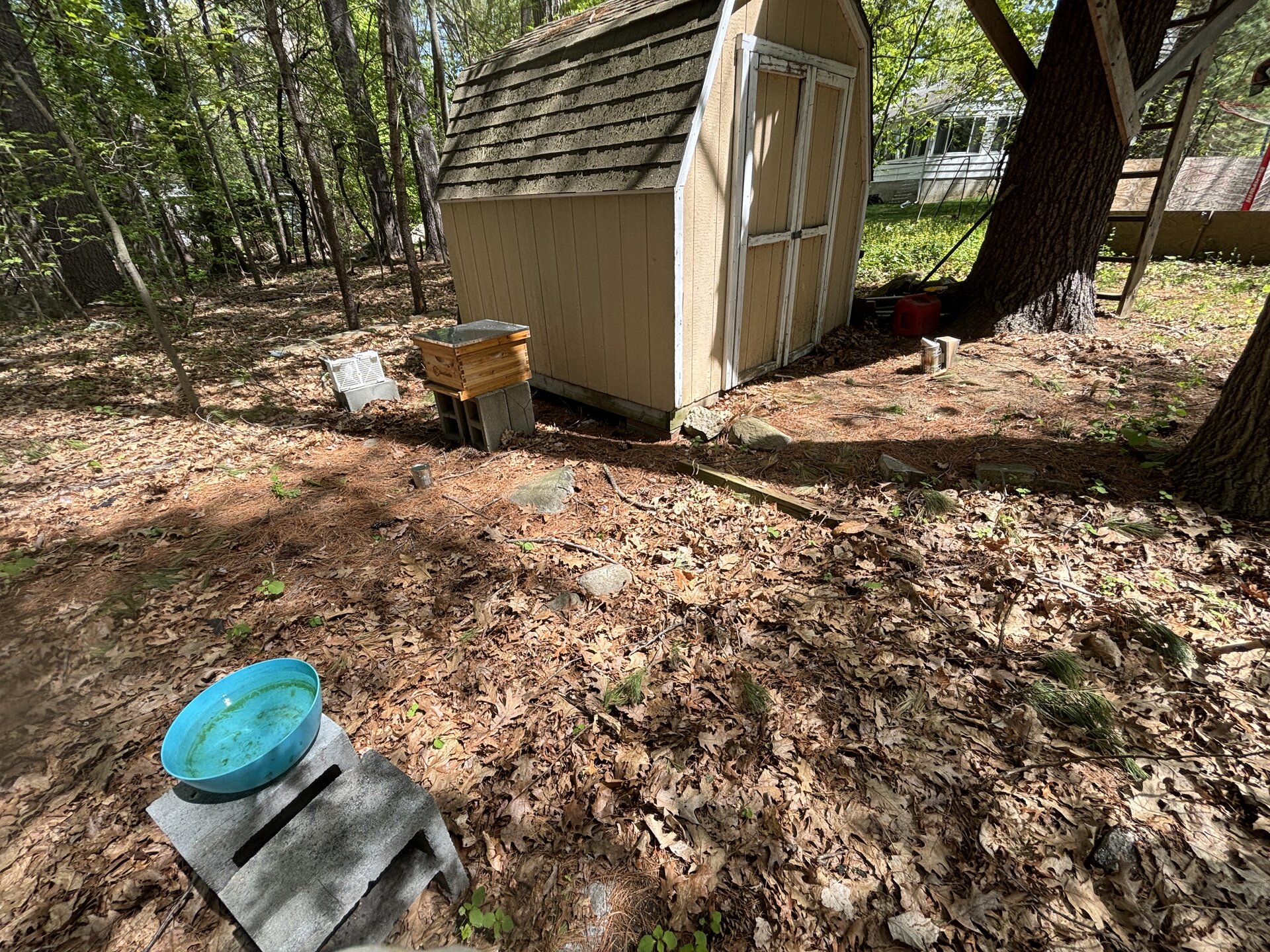 The site, post-cleanup. New hive on the blocks.
Pre-flight.
Mixed up 1:1 sugar syrup on the stove — that swirling white-into-clear shot is more satisfying than it has any right to be.
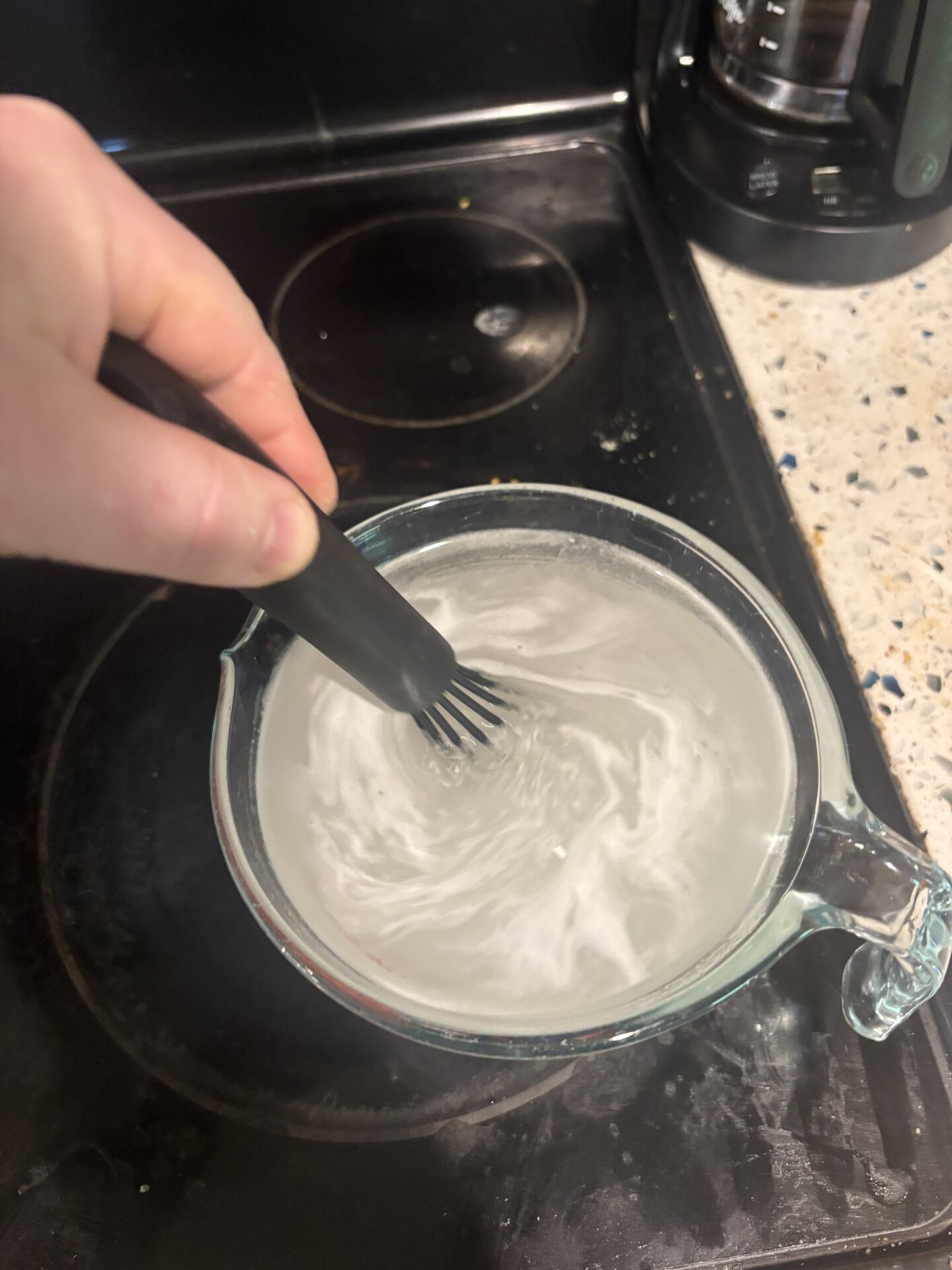 1:1. Two cups water, two cups sugar.
Suit on (Bruins patch holding strong, fish patch on the sleeve, smiley face on the leg — this suit has earned every one of them).
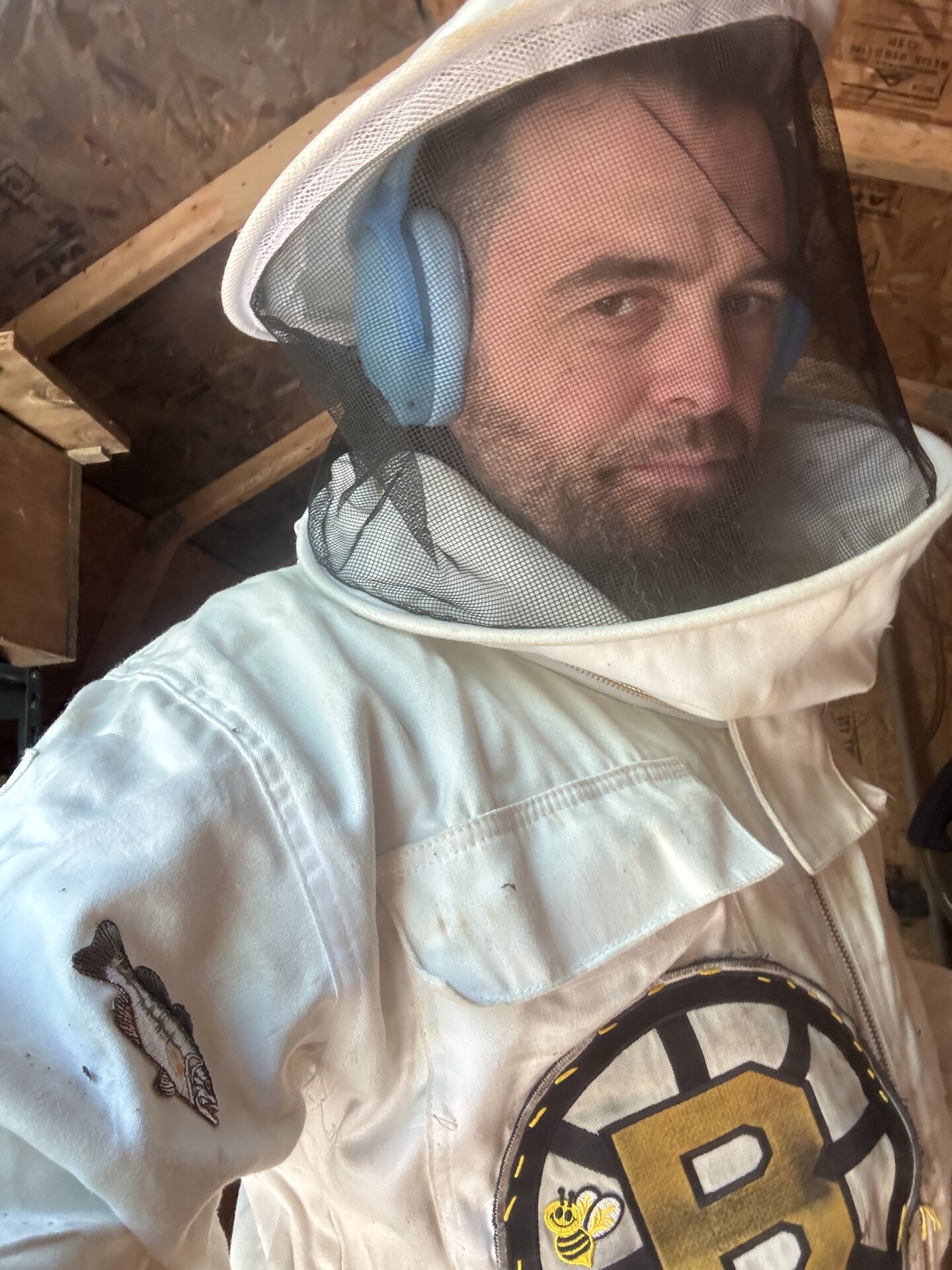 The suit. Patches earned.
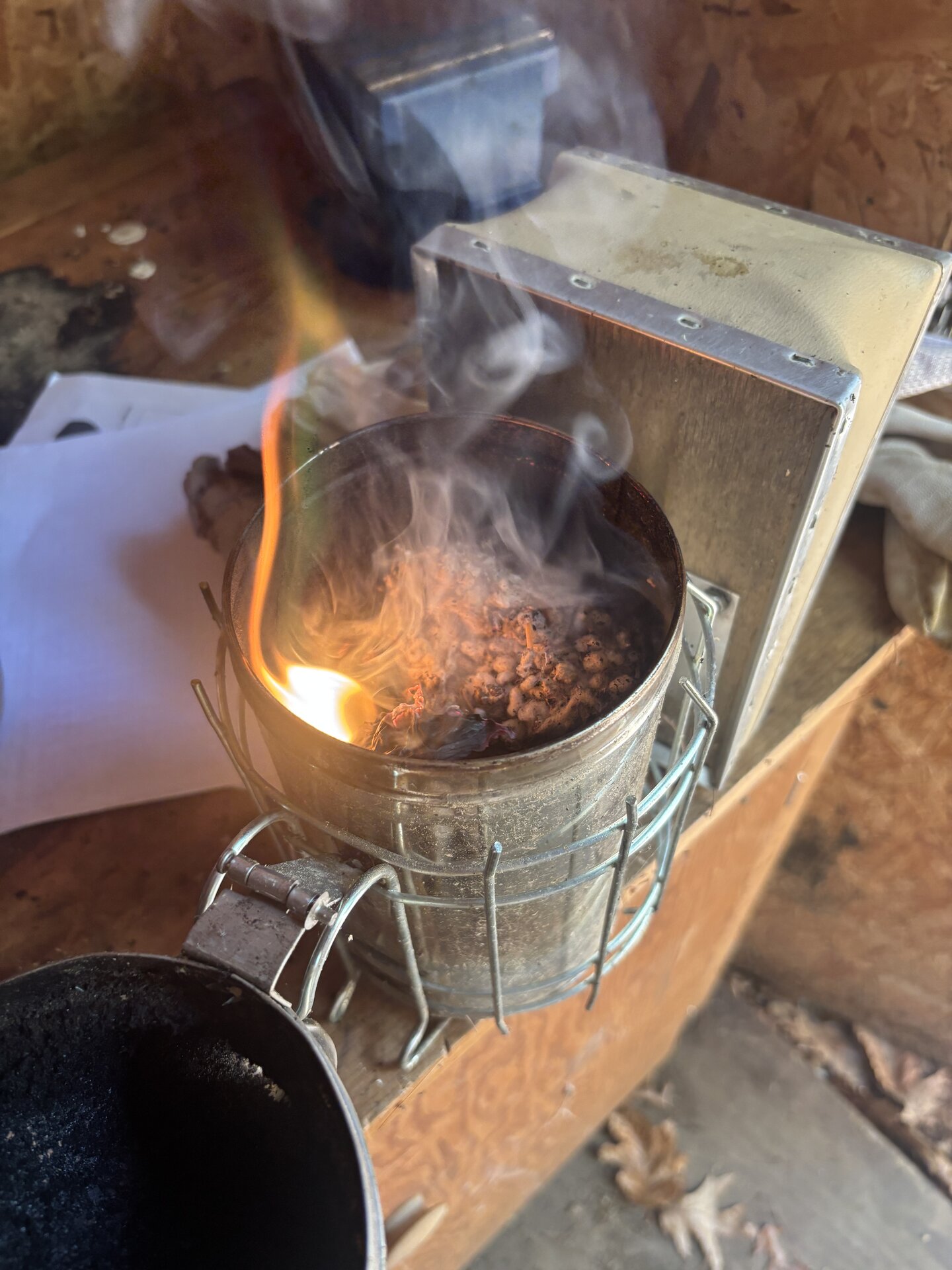
Smoker lit with pellets and a little kindling, good thick white smoke before walking out to the hive.
The install.
Spray bottle ended up not working. The bees were having none of it. Switched to a few solid puffs of smoke at the entrance and over the package and that’s what unlocked them. Lesson logged: skip the spray next time, go straight to smoke.
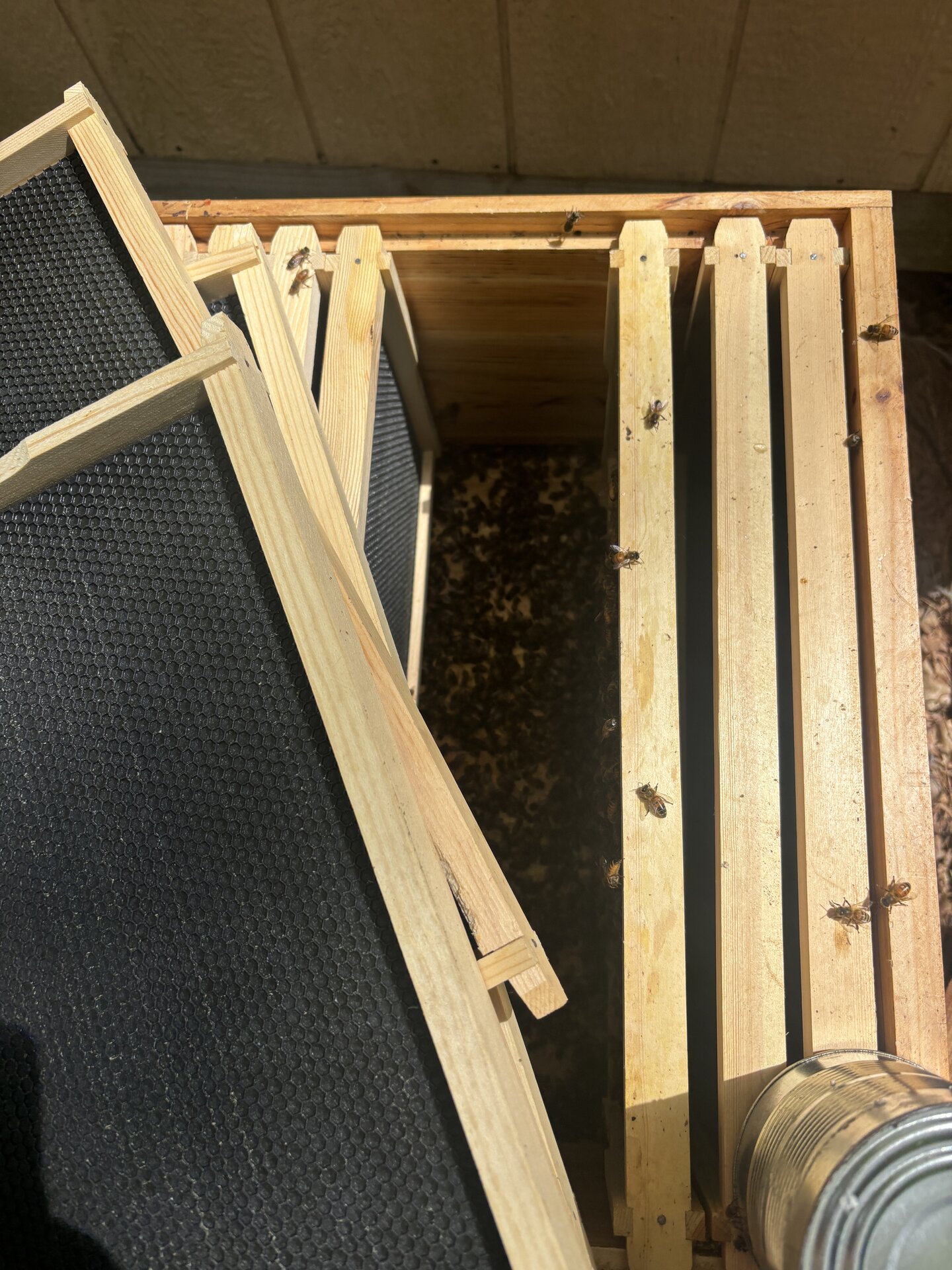
Pulled the queen cage, checked the candy plug was intact, confirmed she’s in there with attendants. Hung her between the middle frames. Shook the rest of the bees in around her, set the feeder can on top, slid the entrance reducer in, closed it up.
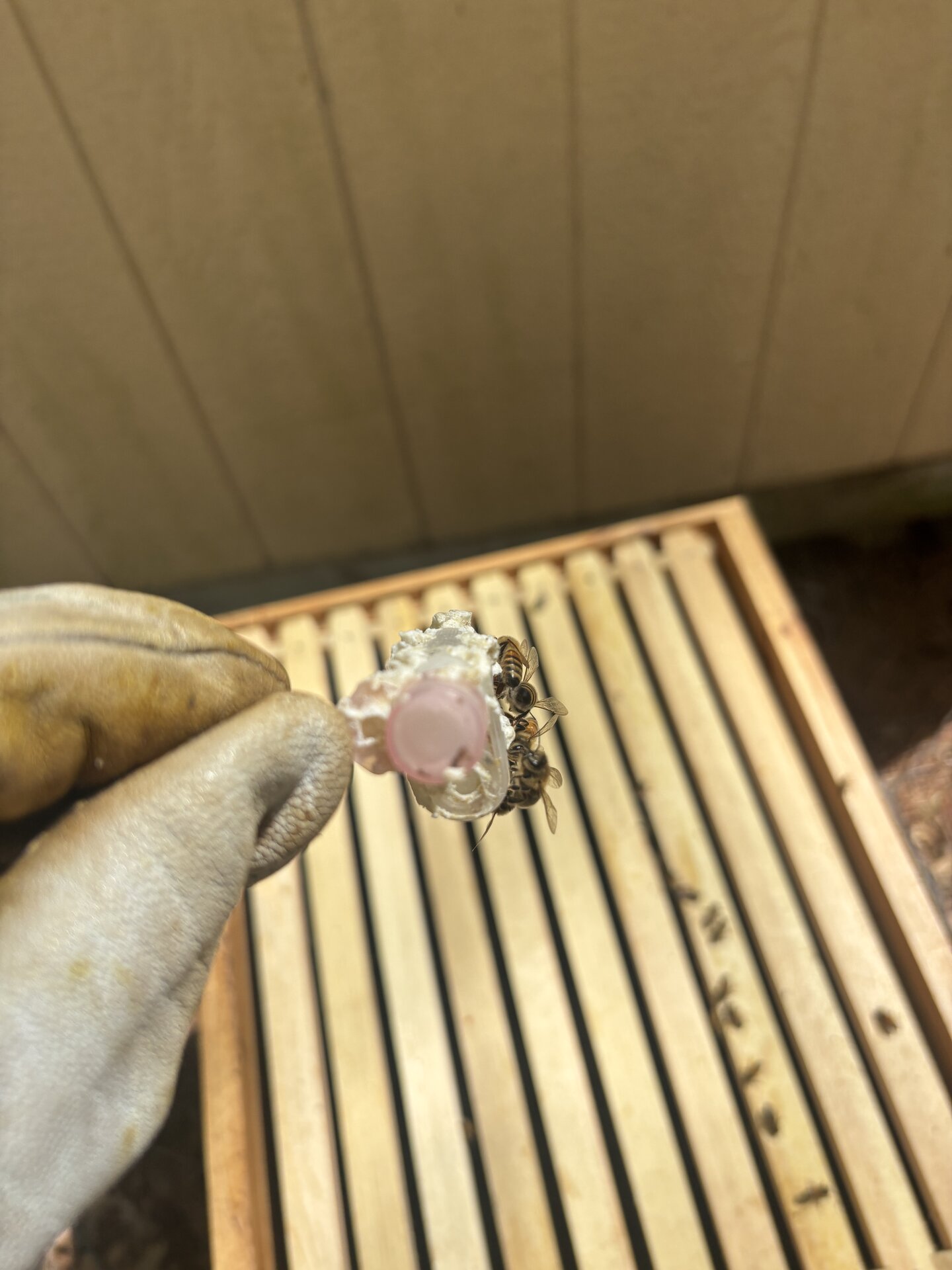 Queen present, candy plug intact, attendants on duty.
Clean water on a cinder block in the blue bowl a few feet off to the side. Standard setup, but worth noting — the bees were finding it within the hour.
Forage signal.
Saw a bee on a dandelion this morning before any of this kicked off. Not mine — too early — but a good sign. The forage is on around here.
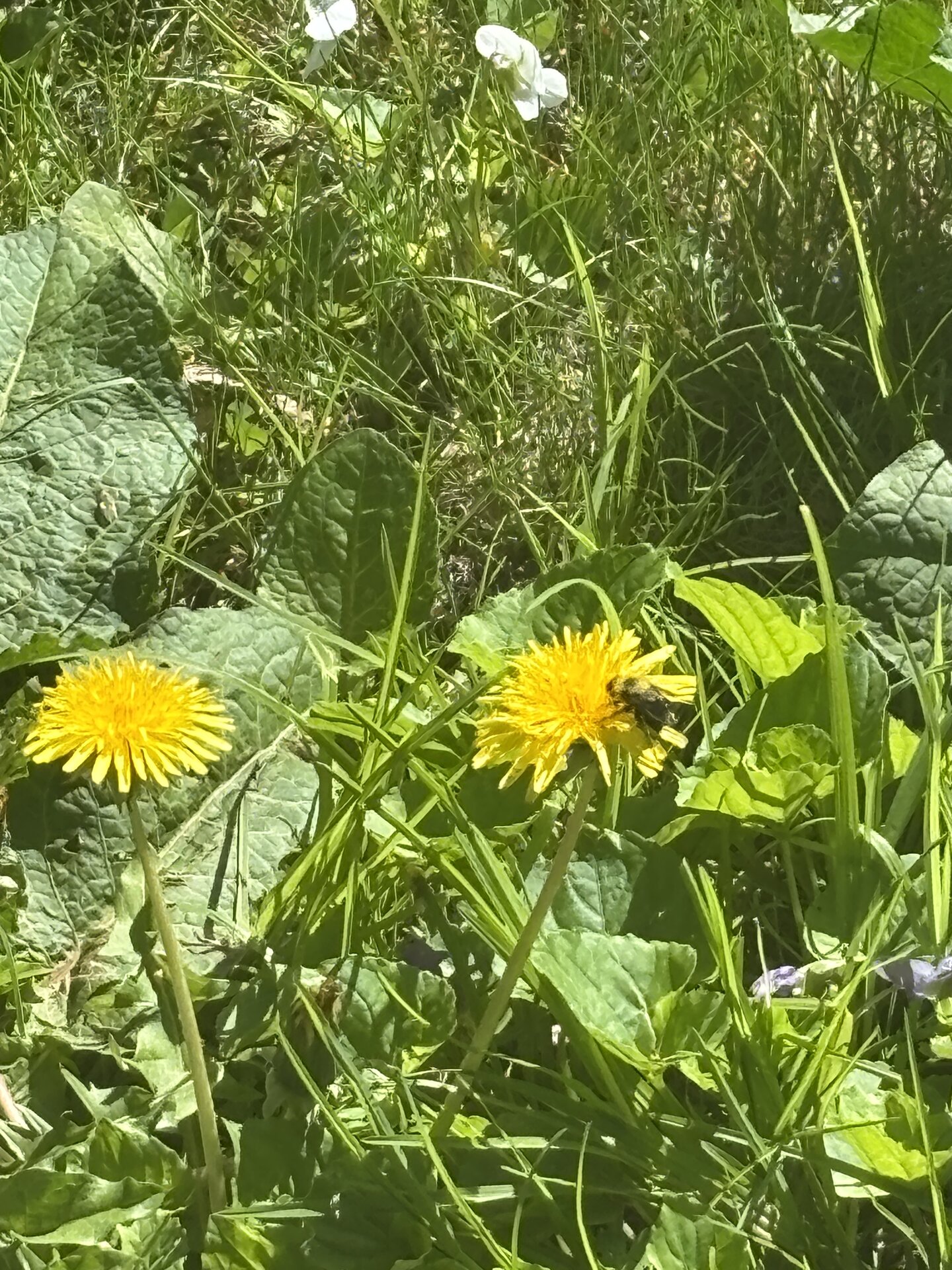 Not mine. But a good sign.
Punch list.
- 3D-printed entrance reducer — the wood one is doing the job, but the print queue is open
- Queen release window: 3–7 days, watch the cage
- Finish cleaning out the old colony, deal with the mouse situation
- One-week inspection: confirm release, look for early laying, check syrup level
- Pull the feeder can once it’s drained
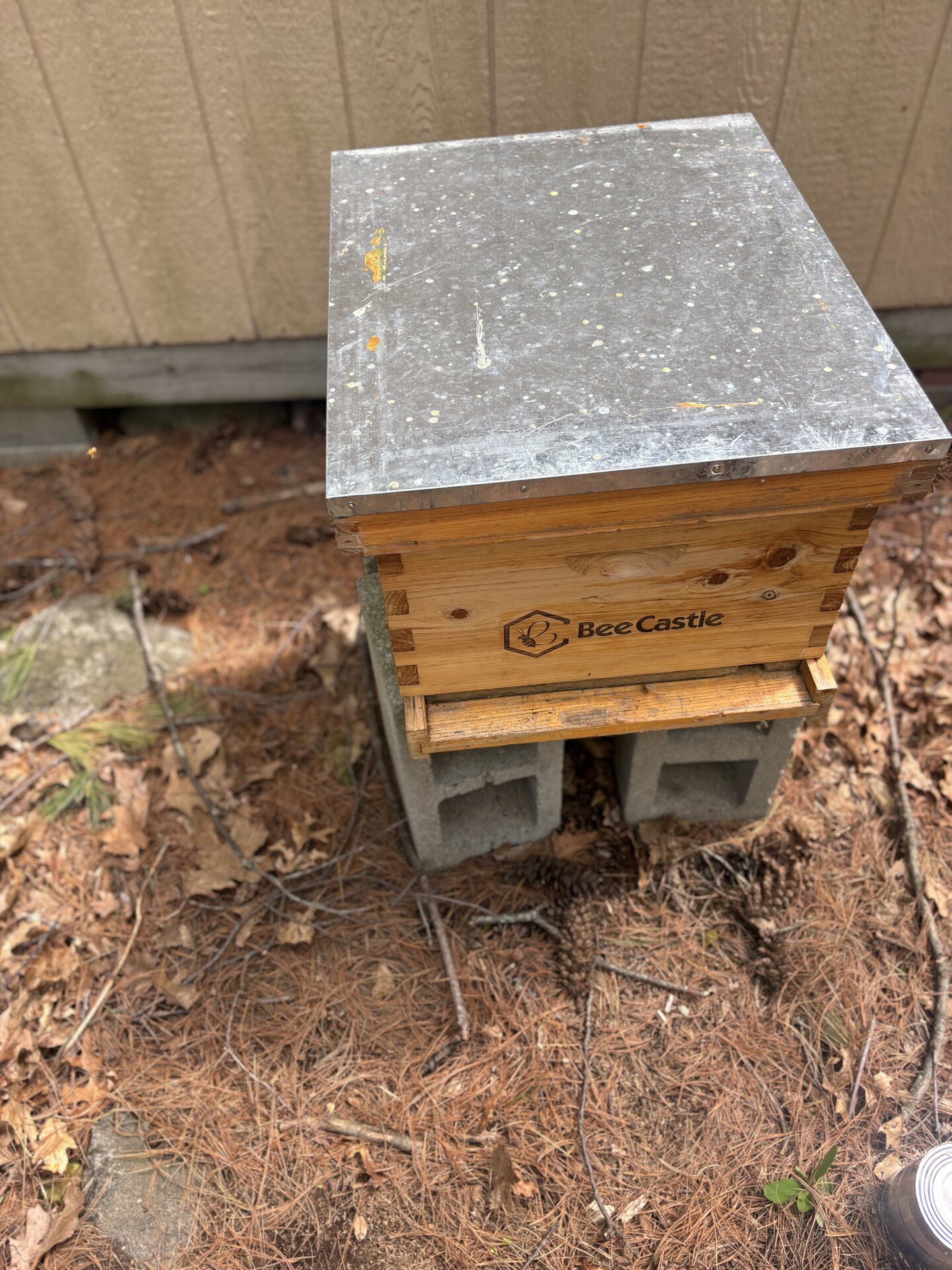
Bees are home.